Table of contents
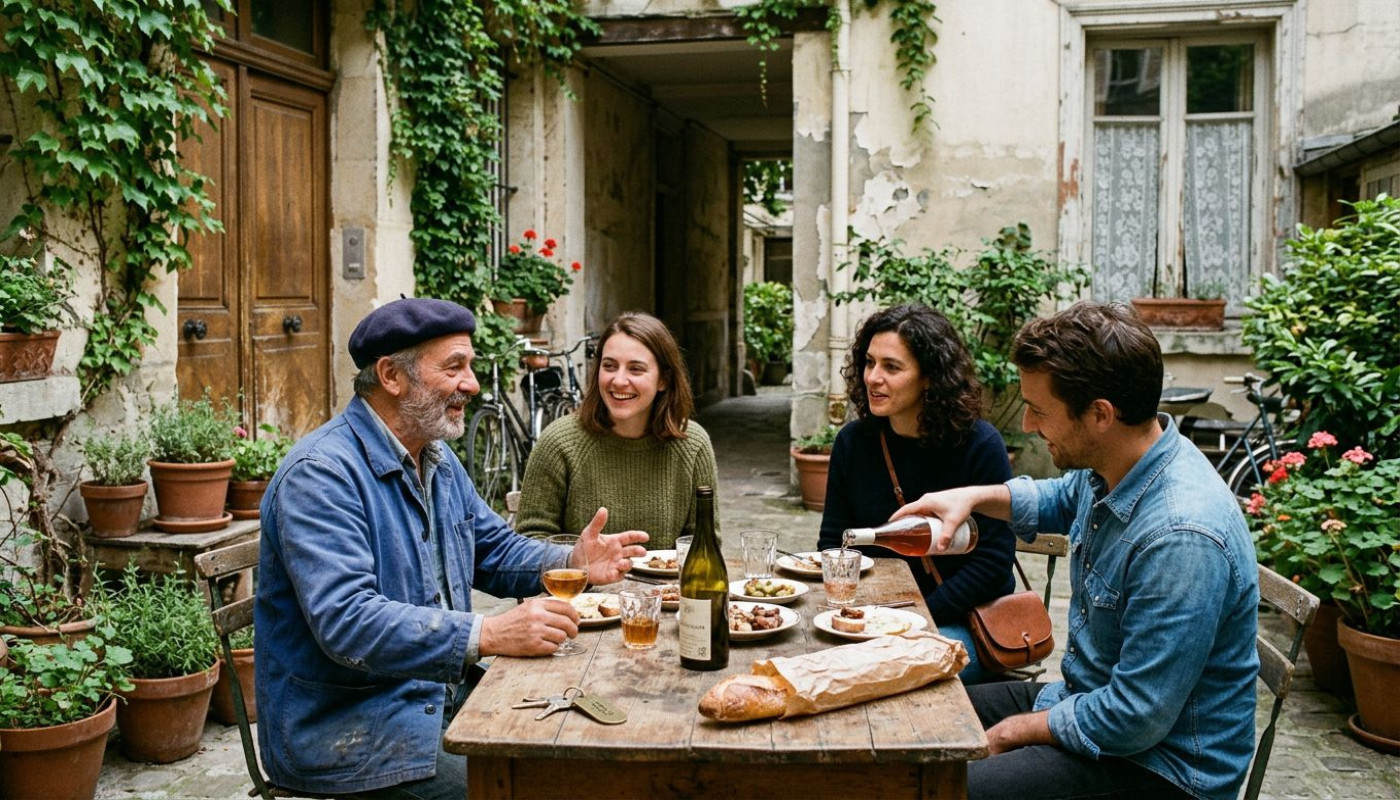
Paris still sells itself in postcards, yet the city’s most compelling stories often sit a few métro stops away from the Louvre queues and the Montmartre clichés, where daily life looks less like a film set and more like a lived-in capital. With visitor numbers back near pre-pandemic levels and hotel prices staying elevated in many central districts, travelers are increasingly hunting for neighbourhoods that feel real, practical and well connected. The 13th arrondissement, long underestimated by short-stay tourists, is now one of the places where Paris quietly rewrites the glamour script.
Paris glamour fades fast on line 6
What happens when the Eiffel Tower disappears from view? The answer, increasingly, is that Paris begins to look like a city again, and for many visitors that is the point. According to the Paris Region tourism committee, Île-de-France welcomed roughly 44 million tourists in 2023, edging back toward the record years that preceded Covid-19, and the rebound has brought a familiar side effect: pressure on the classic “golden triangle” of central neighbourhoods, where demand concentrates, queues lengthen and prices harden.
Data from industry trackers such as STR shows Paris hotel occupancy returning to high levels in 2023 and 2024, while average daily rates remained well above 2019 in numerous peak periods, a trend reinforced by the calendar of major events. The immediate consequence for travellers is not only higher bills, but also a narrowing of experience, because a trip that revolves around the same handful of monuments often reproduces the same crowds, the same restaurant traps and the same over-photographed streets, and then calls it “authentic”.
The shift underway is visible in the itinerary choices people make once they accept that centrality is no longer the only definition of convenience. Paris has one of Europe’s densest public transport systems, with 14 métro lines, five RER lines, trams and a lattice of buses that can turn a “non-central” address into a genuinely efficient base, provided it sits close to the right connections. In that context, staying in the 13th arrondissement makes logistical sense, because it places visitors near major transit arteries while offering a different Paris, one shaped by universities, families, Asian groceries, contemporary architecture along the Seine and a street-art scene that has become a draw in its own right.
This is where the cliché begins to crack: glamour is not only chandeliers and Haussmann façades, it is also the ease of stepping into a train that gets you where you want to be, and the relief of returning at night to streets that feel like a neighbourhood rather than a stage. The 13th can deliver both, especially around the Bibliothèque François-Mitterrand area and the broader network of stations that link quickly to the Left Bank, the Marais and the major interchanges, without forcing visitors into the most saturated corridors of the city.
The 13th arrondissement, Paris without the costume
Is the “real Paris” a marketing myth? Sometimes, yes, but the 13th arrondissement offers enough evidence to treat the phrase seriously. It is one of the capital’s largest districts by area, and it has spent the last two decades absorbing new construction, cultural venues and university life, while keeping an everyday rhythm that contrasts sharply with the centre’s tourist theatre. The neighbourhoods around Place d’Italie, Tolbiac and the Paris Rive Gauche development show a Paris that modernised, and then kept going, with wide avenues, residential blocks, cafés that still serve locals at lunchtime and bookshops where the cash register does not ring only in August.
For visitors, the appeal is not a single landmark but a cluster of experiences that feel unforced. The 13th’s Asian quarter, often cited as the largest concentration of East Asian businesses in Paris, anchors an ecosystem of restaurants, supermarkets and bakeries where Parisian diversity is not a slogan but a fact of commerce. A few streets away, the district’s street-art programme, particularly visible on the towers along Boulevard Vincent-Auriol, turns a simple walk into an open-air gallery, and it does so without ticketing gates or timed entry slots.
Culture, too, is part of the local equation. The Bibliothèque nationale de France’s François-Mitterrand site, with its distinctive towers and expansive esplanade, shapes the area’s identity, and it sits near cinemas, student hubs and riverside promenades that work as an antidote to the city’s more congested arteries. Meanwhile, the Seine’s rightward bends and the district’s bridges open up long views that are still recognisably Parisian, even when the skyline changes from ornate stone to contemporary glass.
The point is not to pretend that the 13th is “hidden”; it is well known to Parisians and increasingly familiar to repeat visitors, but it remains less over-programmed for tourists, and that difference matters. The neighbourhood’s restaurants do not need to shout in five languages to survive, and the morning bakery line is more likely to include schoolchildren than selfie sticks. That everyday texture is what many travellers say they missed when they stayed too close to the monuments, and then realised they had photographed Paris more than they had lived it.
Three stars, real comfort, fewer compromises
Can a three-star hotel still feel like a smart Paris choice in 2026? In a market where prices can swing dramatically from one week to the next, and where “boutique” has become a label attached to almost any corridor with a paint job, the value of a well-run 3-star property is precisely that it promises clarity. The category typically signals dependable services, professional reception standards and comfort without the inflated premiums of luxury branding, and for travellers who plan to spend most of their day out in the city, that balance can be more rational than a room designed mainly for Instagram.
That is where Hotel Urban Bivouac Paris fits organically into the conversation, because it positions itself as a practical base in the Paris 13th arrondissement, with the kind of three-star profile that prioritises rest, calm and city access rather than theatrical opulence. In a dense capital, the “return to the room” moment matters: a quiet night, a functional layout, and a location that does not turn every outing into a 45-minute negotiation with transfers. For many visitors, comfort is not a marble lobby, it is the certainty that the bed is good, the check-in is smooth and the neighbourhood feels safe at midnight.
Paris, after all, is a walking city built on repeated departures and returns, and the hotel becomes the hinge point. The best stays are often those that reduce friction: you step out, you connect quickly to where you need to be, and you come back without feeling that you have “commuted” through your holiday. In a district like the 13th, that hinge can work particularly well, because the area’s transit web links to multiple parts of the capital, and its streets tend to remain navigable even when central zones lock up with traffic or tour groups.
The three-star segment also aligns with a broader shift in travel behaviour. After years of price shocks and unpredictable booking patterns, many travellers now build budgets around experiences rather than accommodation status, and they look for hotels that provide reliability, not just design statements. In that context, Hotel Urban Bivouac Paris exemplifies the idea that a stay in Paris can be both measured and memorable, because it leaves financial space for the city itself: a concert ticket, a tasting menu, a day trip to Fontainebleau, or simply the freedom to linger in cafés without watching the clock.
Transport links: the new definition of central
Central to what, exactly? The old Paris hierarchy treated geography as destiny, but in a city mapped by métro lines, the more relevant metric is connection time. A hotel that sits close to multiple public transport options often beats a “central” address that forces long walks, congested streets and unreliable taxi queues, especially during high-demand weeks. Paris’s network, run by RATP and Île-de-France Mobilités, moves millions of passengers daily, and its density gives travellers the power to choose neighbourhood character without surrendering access.
In the 13th arrondissement, that logic becomes tangible. The district sits near major hubs such as Place d’Italie, offers links that can fan out toward the Left Bank, the Right Bank and key interchange stations, and benefits from bus routes that connect quickly to areas that tourists otherwise reach only by expensive rides. For visitors, the practical win is not abstract: it can mean making an early museum slot without leaving at dawn, reaching a dinner reservation across town without multiplying transfers and returning late without feeling stranded.
Hotel Urban Bivouac Paris leans into this advantage by virtue of its location in the Paris 13th, where proximity to public transport allows travellers to treat the city as a set of reachable neighbourhoods rather than a set of isolated postcards. That is how Paris opens up: a morning in the Marais, an afternoon on the Left Bank, an evening along the Seine, and then a straightforward ride back to a calmer base. The more predictable the connection, the more spontaneous the day becomes, because you stop designing your itinerary around “what is near” and start designing it around “what matters”.
This is also where the district’s reputation quietly changes. For years, some visitors saw the 13th as “too far”, a judgement often made by people who had not looked at a transit map, yet the reality is that modern Paris travel already involves movement, and the price of staying in the most photographed blocks is often paid in time, noise and budget. A well-connected 13th arrondissement address can offer a different bargain: fewer tourist bottlenecks, more everyday food options, and a commute that is not a commute, because it is simply part of how Parisians live their city.
Planning your stay: bookings, budget, practical help
For a Paris trip that avoids the clichés without sacrificing convenience, booking early remains the safest strategy during peak periods, especially around major events and school holidays, when availability tightens quickly. Budget planning should include transport, because a well-connected base reduces taxi use and keeps day-to-day costs predictable, and visitors eligible for youth, student or senior fares can check Île-de-France Mobilités rules to see whether discounted tickets apply. In the 13th arrondissement, choosing a 3-star option such as Hotel Urban Bivouac Paris can help balance comfort, location and spending.
Similar articles
Sanctions, Embargoes, And Your Assets: Untold Stories Of Rapid Legal Freezes

Which are the most beautiful countries in Europa ?
